Go Night Scuba Diving
From $75
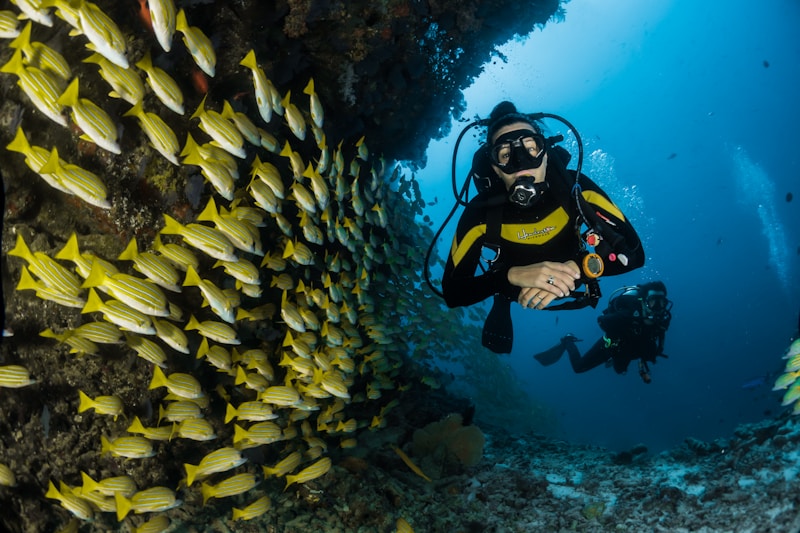
Go Night Scuba Diving
Explore the underwater world after dark with a flashlight.
At a Glance
$75+
2-3 hours
Any dive destination
Year-round
About This Experience
Night diving inverts everything familiar about the underwater world, transforming reef environments into something genuinely alien. Your flashlight beam becomes a narrow window into darkness, revealing creatures that hide during daylight hours: octopuses hunting across coral, basket stars unfurling their feeding arms, cephalopods whose colors shift under direct light, and predators whose eyes reflect your beam with unsettling luminosity. The darkness itself becomes a presence—beyond your light's reach, the black water holds mysteries that your imagination populates with everything you've ever feared about the ocean. The sensory shift begins at the surface. You descend into darkness rather than blue water, your regulator and bubbles audible in ways daytime diving masks. The beam of your primary light carves a cone through the black; everything outside that cone might as well not exist. Buddy proximity becomes critical—losing your dive partner in the dark creates genuine emergency. The hand signals you learned become flashlight gestures, light beams swung in patterns that communicate across the void. The marine life transformation justifies every moment of disorientation. Parrotfish encase themselves in mucus cocoons, sleeping in crevices they'd never tolerate during daylight. Moray eels emerge from their lairs to hunt, their sinuous forms crossing open sand that they'd avoid under the sun. Octopuses, shy and hidden by day, become bold hunters whose color changes and texture shifts visible in your light create displays that daytime diving never offers. The Spanish dancer nudibranch—an enormous sea slug that swims by undulating its red-frilled mantle—appears mainly at night, its movement explaining its name. The bioluminescence adds magic impossible to capture in photographs. Wave your hand and the water sparkles with blue-green light from disturbed plankton. Turn off your flashlight and the reef glows with organisms producing their own illumination. Some divers experience bioluminescence storms where every movement trails fire through the water. This living light exists during day dives too, but darkness makes it visible—one of those phenomena that has always been there, hidden by the sun's competition. Kona, Hawaii provides what many consider the world's finest night diving experience: manta ray encounters where the massive rays—wingspans reaching 15 feet—perform feeding displays illuminated by underwater lights. Hotels and dive boats position lights to concentrate plankton; the mantas arrive to feed, barrel-rolling through the cloud of food, passing within inches of divers who kneel on the sandy bottom watching. The rays are wild animals, not trained performers, yet they return night after night because the lighting creates feeding opportunities they've learned to exploit. The preparation for night diving extends your existing certification with specific skills. Daytime familiarity with the site helps—you should have dived the location previously, understanding its layout before darkness removes visual references. Backup lights are essential; a primary light failure becomes emergency without redundancy. The descent line provides navigation reference that you don't need when the reef is visible from the surface. Conservative dive planning acknowledges that problems at night compound in ways daylight diving forgives. The psychological component deserves honest acknowledgment. Night diving is not for everyone. The darkness triggers primal responses in some divers that training cannot fully overcome. The unknown beyond your light's reach can become overwhelming. There's no shame in recognizing that night diving isn't for you; plenty of incredible diving happens during daylight. But for those who push through the initial discomfort, night diving reveals an ocean that daytime visitors never experience—a world transformed by darkness into something that feels like genuine exploration.
Cost Breakdown
Estimated costs can vary based on location, season, and personal choices.
Budget
Basic experience, economical choices
Mid-Range
Comfortable experience, quality choices
Luxury
Premium experience, best options
Difficulty & Requirements
Requires some preparation, skills, or resources.
Physical Requirements
Scuba certification required
Prerequisites
- Open Water certification
- Comfort diving
Tips & Advice
Do a day dive at the site first
Carry primary and backup lights
Stick close to your buddy
Wave your light through the water to see bioluminescence
Manta ray night dives in Kona, Hawaii are legendary
Community Discussion
Ask questions, share tips, or read experiences from others.
View Discussions Start DiscussionShare This Experience
Quick Summary
- Category Adventure
- Starting Cost $75
- Time Needed 2-3 hours
- Best Season Year-round
- Difficulty Challenging
You Might Also Like
Get Scuba Certified
Unlock the underwater world with your open water certification.

Swim in Bioluminescent Waters
Watch the water glow around you with each movement.
Learn to Freedive
Dive deep on a single breath.
Cage Dive with Great White Sharks
Come face-to-face with the ocean's apex predator.