Go Skydiving
From $200
Go Skydiving
Experience the ultimate adrenaline rush by jumping from a plane.
At a Glance
$200+
Half day
Spring through fall
About This Experience
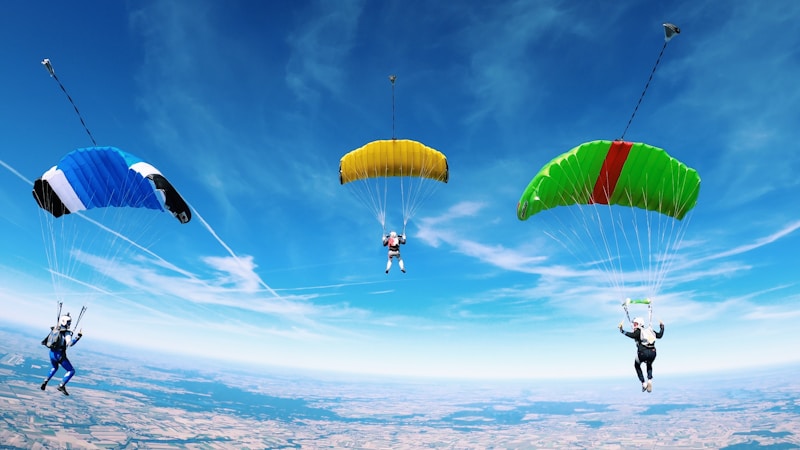
Skydiving delivers the most intense single moment most people will ever experience—the instant you leave a perfectly good airplane at 10,000-15,000 feet and begin accelerating toward Earth at 120 miles per hour. Your brain, hardwired across millions of years to avoid precisely this situation, floods your system with adrenaline, time seems to stretch, and for approximately 60 seconds of freefall, you exist in a state of pure, overwhelming sensation that wipes clean every mundane concern you carried up in that aircraft. The tandem jump makes this experience accessible to anyone in reasonable health. You're harnessed to an instructor with thousands of jumps who handles all the technical work—deploying the chute, steering to the landing zone, managing any issues that arise. Your job is simply to arch your body properly during freefall and enjoy an experience that changes how you think about fear, risk, and what your body can actually handle. The training takes about 30 minutes; the flight up takes 15-20 minutes of building anticipation; the jump itself creates memories that persist for a lifetime. The freefall phase lasts around 60 seconds from typical jump altitudes, though higher jumps (available at premium prices) extend this to 90 seconds or more. Terminal velocity for a human body in the standard arch position is about 120 mph—faster if you orient headfirst (up to 180 mph), slower with the deployment of a drogue chute that tandem jumps use for stability. The sensation isn't falling so much as flying—the air pressure creates a surface you can push against, and experienced skydivers "fly" their bodies through three-dimensional space with remarkable precision. The parachute deployment ends the intensity and begins the serenity. The canopy opens (tandem chutes are designed for soft, reliable openings), the noise and wind drop away, and suddenly you're floating beneath a fabric wing with panoramic views in every direction. This phase lasts 5-7 minutes, during which you can enjoy the scenery, practice steering the canopy if your instructor allows, and gradually process what just happened. Many people find this transition—from maximum intensity to perfect peace—as affecting as the freefall itself. The safety statistics, while never zero, are remarkably good for such an extreme activity. The United States Parachute Association reports approximately 0.0028 fatalities per 1,000 jumps—meaning skydiving is statistically safer than driving to the drop zone. Tandem jumping is even safer, as equipment failures are managed by highly experienced instructors. Modern sport parachuting equipment has transformed skydiving from a military necessity into an accessible adventure sport. The drop zone experience varies from basic operations in farmer's fields to sophisticated facilities with viewing areas, packing buildings, and post-jump gathering spaces. The culture tends toward casual, welcoming, and enthusiastic—skydivers genuinely enjoy sharing their sport with newcomers. The video packages are expensive but almost universally worth it; the footage of your face during the door exit and freefall captures expressions you'll never reproduce elsewhere. The progression beyond tandem is available for those who catch the bug. Accelerated Freefall (AFF) training takes you from tandem passenger to solo jumper over approximately 25 jumps, after which you can jump independently and begin learning the aerial skills—formations, tracking, canopy piloting—that make skydiving a sport rather than just an experience. Many tandem jumpers immediately book AFF courses, unable to imagine returning to a life without regular access to the sky. The first jump creates a before-and-after line in many people's lives. Something you were absolutely certain you could never do becomes something you've done. The expansion of what seems possible often spreads beyond skydiving into other areas of life. For that reason alone, beyond the pure experiential intensity, skydiving earns its place on bucket lists around the world.
Cost Breakdown
Estimated costs can vary based on location, season, and personal choices.
Budget
Basic experience, economical choices
Mid-Range
Comfortable experience, quality choices
Luxury
Premium experience, best options
Difficulty & Requirements
Requires some preparation, skills, or resources.
Physical Requirements
Generally healthy, weight limits apply (usually under 220-250lbs)
Prerequisites
- No recent surgeries
- Not pregnant
- No heart conditions
Tips & Advice
Tandem jumps require no experience
Wear comfortable, athletic clothing
Eat a light meal beforehand
Don't drink alcohol the night before
Splurge on the video package - you'll want it
Related Topics
Community Discussion
Ask questions, share tips, or read experiences from others.
View Discussions Start DiscussionShare This Experience
Quick Summary
- Category Adventure
- Starting Cost $200
- Time Needed Half day
- Best Season Spring through fall
- Difficulty Challenging
You Might Also Like

Bungee Jump
Take the leap and freefall before bouncing back.

Go Paragliding
Soar like a bird with just a parachute and the wind.
Witness a Wingsuit Flight
Watch humans fly through the air in wingsuits.

Summit Mount Everest
Stand on top of the world at 29,032 feet.